



When you think of Los Cabos, pristine beaches, dramatic desert landscapes and unforgettable adventures on the Sea of Cortés likely come to mind. But beneath those iconic views lies a history stretching back thousands of years.
Long before luxury resorts and marinas, indigenous communities called this region home. Their stories are still etched into canyon walls, preserved in ancient shell mounds and celebrated in local museums, offering travelers an entirely different way to experience Los Cabos.
Whether you’re looking to add a culture stop to your itinerary or venture beyond the well-known attractions, here’s how to discover Los Cabos’ fascinating past.
Meet the Indigenous Peoples of Baja California Sur
The history of Los Cabos was shaped by several Indigenous cultures, each uniquely adapted to life on the Baja California peninsula.
The Pericú called the southern tip of the peninsula home, including present-day Cabo San Lucas and San José del Cabo. Skilled fishermen and expert navigators, they traveled the Sea of Cortés in handcrafted canoes and considered many natural landmarks, including El Arco / The Arch, to hold deep spiritual significance. Their legacy lives on through archaeological sites, petroglyphs and the stories shared at local museums.
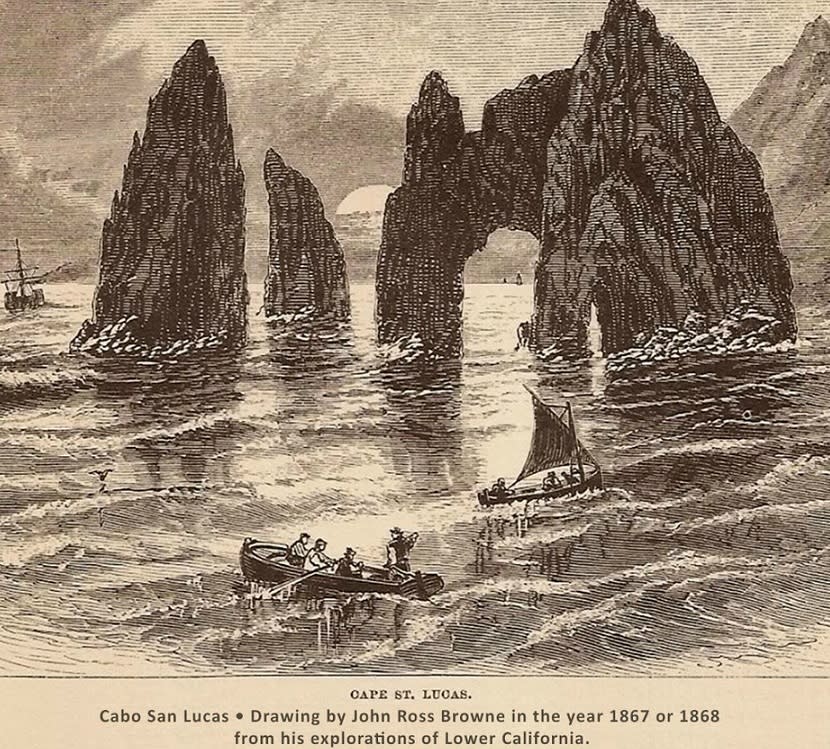
Just north of Los Cabos lived the Guaycura, nomadic hunter-gatherers who thrived in the desert landscapes around present-day Todos Santos and La Paz. Their extensive knowledge of native plants, fishing and desert survival helped them flourish for thousands of years. Travelers can learn more about their history while exploring Todos Santos’ cultural attractions and historic sites.
Farther north, the Cochimí became known for creating some of Baja California Sur’s most spectacular rock art. Their dramatic cave paintings in the Sierra de San Francisco, now recognized as a UNESCO World Heritage Site, remain one of Mexico’s most important archaeological treasures and are well worth adding to a longer Baja road trip. Multi-day guided tours are offered by mule with Saddling South and Kuyima, which are available from the remote village of San Francisco de la Sierra.
Together, these cultures tell the story of a peninsula whose history extends far beyond the arrival of European explorers, offering visitors a deeper appreciation for the current-day landscapes.
Top Historical Sites to Visit
Visit Ancient Petroglyphs Hidden in the Desert
One of the most memorable ways to connect with Baja California Sur's history is by visiting its ancient petroglyphs.
Near the Sierra de la Laguna, visitors can explore sites like Las Manitas, where prehistoric carvings depict human figures, animals and mysterious geometric symbols believed to have been created by the Pericú people thousands of years ago. These remarkable works of art offer a glimpse into a civilization that lived in harmony with the desert landscape.
Many sites are best visited with knowledgeable local guides, who help bring the stories behind these carvings to life while ensuring these archaeological treasures remain protected for future generations. Enjoy a guided hike with Tours Cabo, led by local Pericú descendents, for a chance to explore ancient petroglyphs and enjoy a farm-fresh meal while learning about the region’s history and traditions firsthand. Follow in the footsteps of the ancient Pericú on a guided hike with Cabo San Lucas Tours, where expert guides lead hikes to ancient petroglyphs while sharing the history, wildlife and dramatic landscapes that shaped Baja California Sur’s earliest cultures.
Discover the Legend of the Cave of the Serpent
For travelers willing to venture farther into Baja California Sur, the Cueva de la Serpiente (Cave of the Serpent) is one of the peninsula's most extraordinary archaeological treasures.
Its nearly 8-meter-wide mural features two rare horned serpents surrounded by more than 50 human and animal figures, creating a composition unlike any other found in Baja California. Researchers believe the artwork represents themes of life, seasonal renewal and the importance of water to ancient communities. The horned serpent appears throughout many Indigenous cultures across the Americas as a symbol of abundance, fertility and transformation.
Visiting the Cave of the Serpent offers a unique opportunity to combine outdoor adventure with one of Mexico's most fascinating examples of prehistoric art.
Explore Local Museums and Cultural Centers
Not every history lesson requires a hike.
The Natural History Museum of Cabo San Lucas introduces visitors to the Pericú, Guaycura and Cochimí through archaeological artifacts and exhibits that explain how these communities thrived in Baja California Sur.
If you're visiting San José del Cabo, stroll through the Art District, where galleries and cultural exhibitions often celebrate the region's Indigenous heritage. A day trip to Todos Santos also offers opportunities to learn more about the Guaycura people at the Museo de Historia Regional de Todos Santos and the Centro Cultural Profr. Néstor Agúndez Martínez.
Discover Ancient Shell Mounds
Some of Baja California Sur's oldest archaeological sites aren't caves at all.
Ancient shell mounds, known as shell middens, were created over centuries by Indigenous coastal communities that depended on the rich waters of the Sea of Cortés. These remarkable sites contain shells, tools, fish bones and other artifacts that provide archaeologists with valuable insight into everyday life thousands of years ago.
One of the best-known examples is El Conchalito near La Paz. While many shell mound sites are protected and not open for unrestricted access, they offer another fascinating reminder of the peninsula's deep connection to the sea and the people who first called it home.
Add History to Your Los Cabos Adventure
Adding one or two of these cultural experiences to your itinerary brings a new perspective to the landscapes around you, transforming every canyon, coastline and mountain trail into part of a story thousands of years in the making.
Whether you're hiking to ancient rock art, exploring a local museum or simply learning about the Indigenous cultures that shaped Baja California Sur, discovering Los Cabos' rich history will leave you with a deeper connection to this extraordinary destination.
Ready to dive into the historical side of Los Cabos? Start planning your trip by exploring where to stay, upcoming events and more!